Social Profile

Cataract Surgery in Pune

Best Cataract Surgery in Pune | Deshpande Eye Hospital & Laser Center

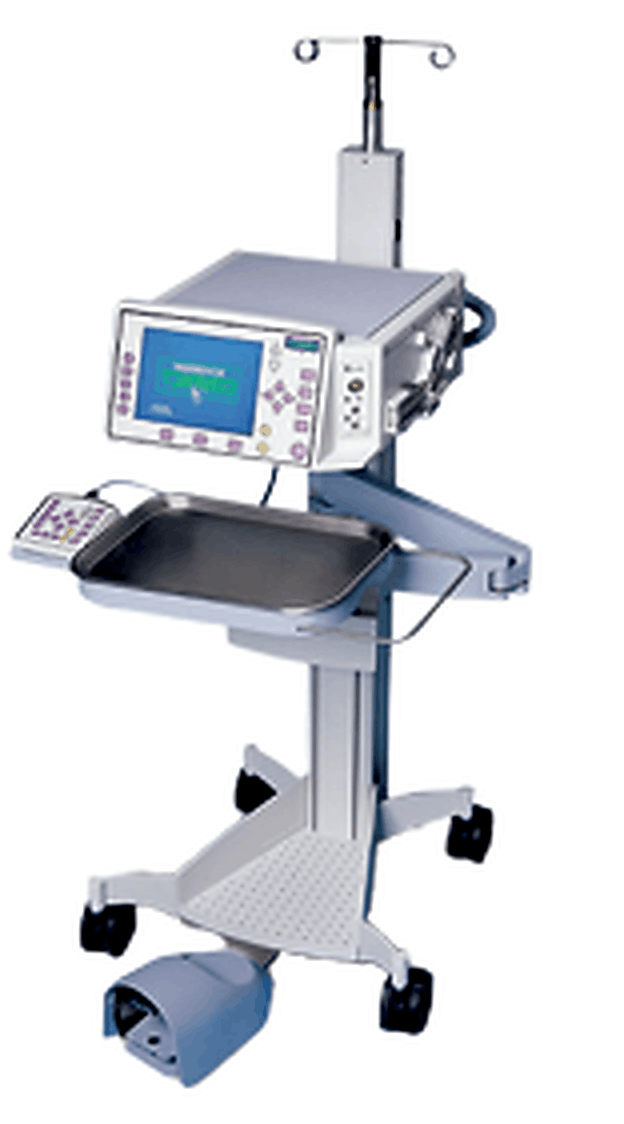
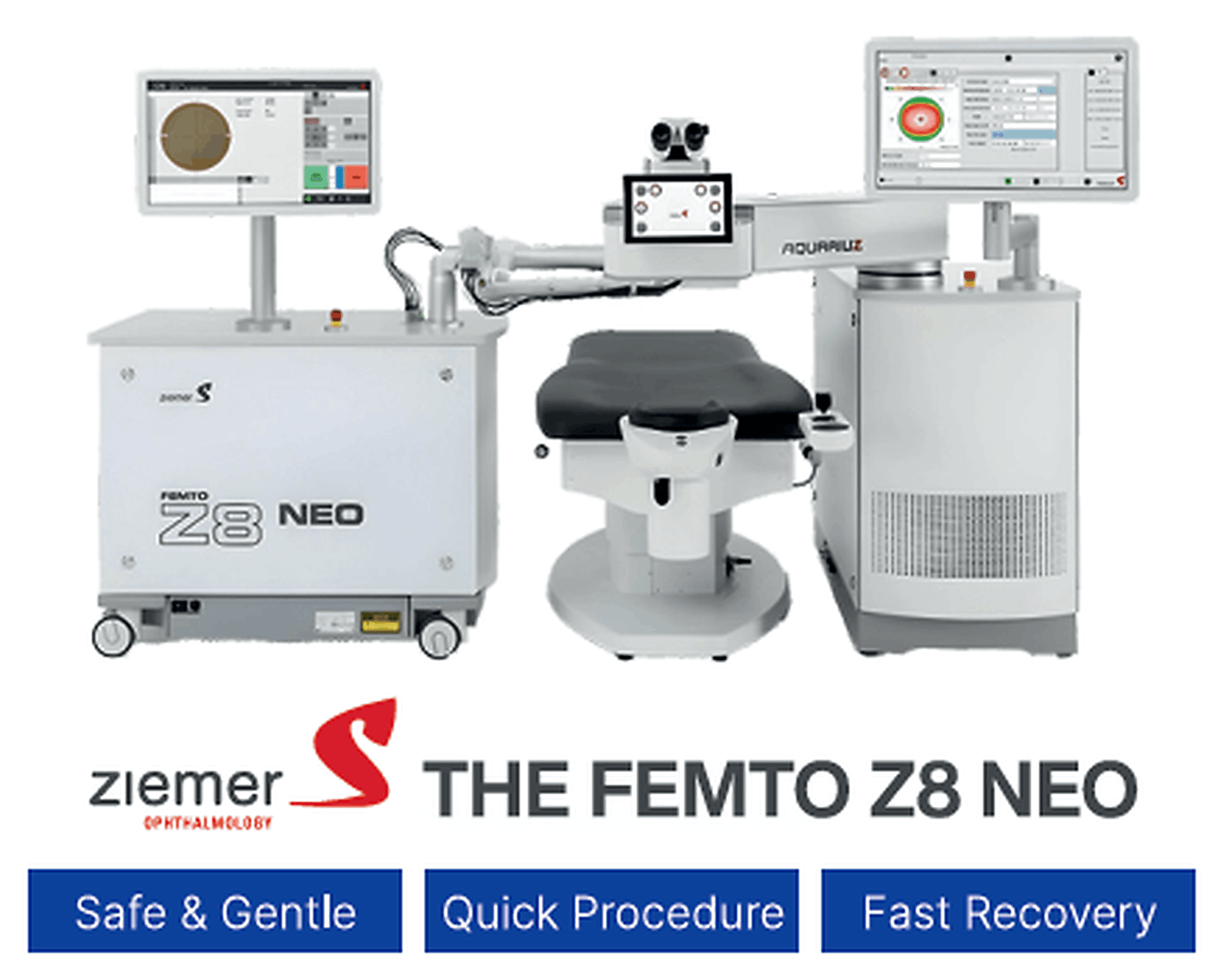
ROBOTIC & BLADELESS FEMTO LASER WITH Al (ARTIFICIAL INTELLIGENCE) CATARACT SURGERY

This is the most advanced technology in cataract surgeryavailable today.
Here the Femto Second Laser is the surgical tool, unlikeother procedures where ultrasonic phaco tip is the surgical tool.
Further advancement in this technique is the introduction Of
Artificial Intelligence (AI) which translates into 100%
accuracy thereby improving the safety and visual outcomes
of cataract surgery.

ADVANTAGES
Artificial Intelligence Guided
Completely Blade- Less
High precision, unmatched by Human Hands
Improves Visual Outcomes
Highest Safety
Use and throw consumable (Disposable for every patient)
Arcuate incision (Reduce cylindrical power)
US- FDA Approved

What is Cataract Surgery?

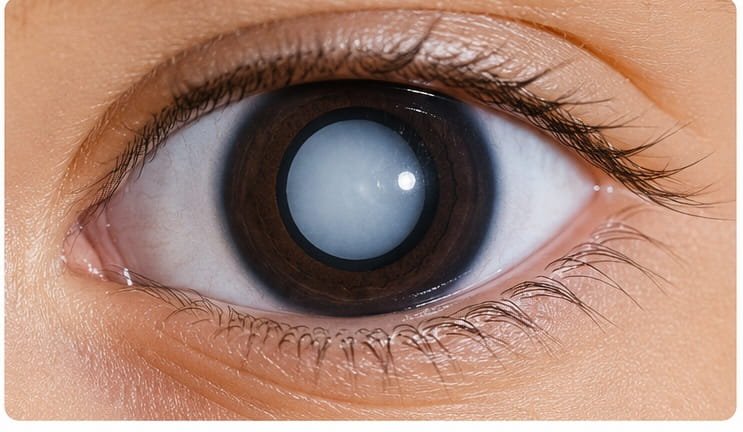
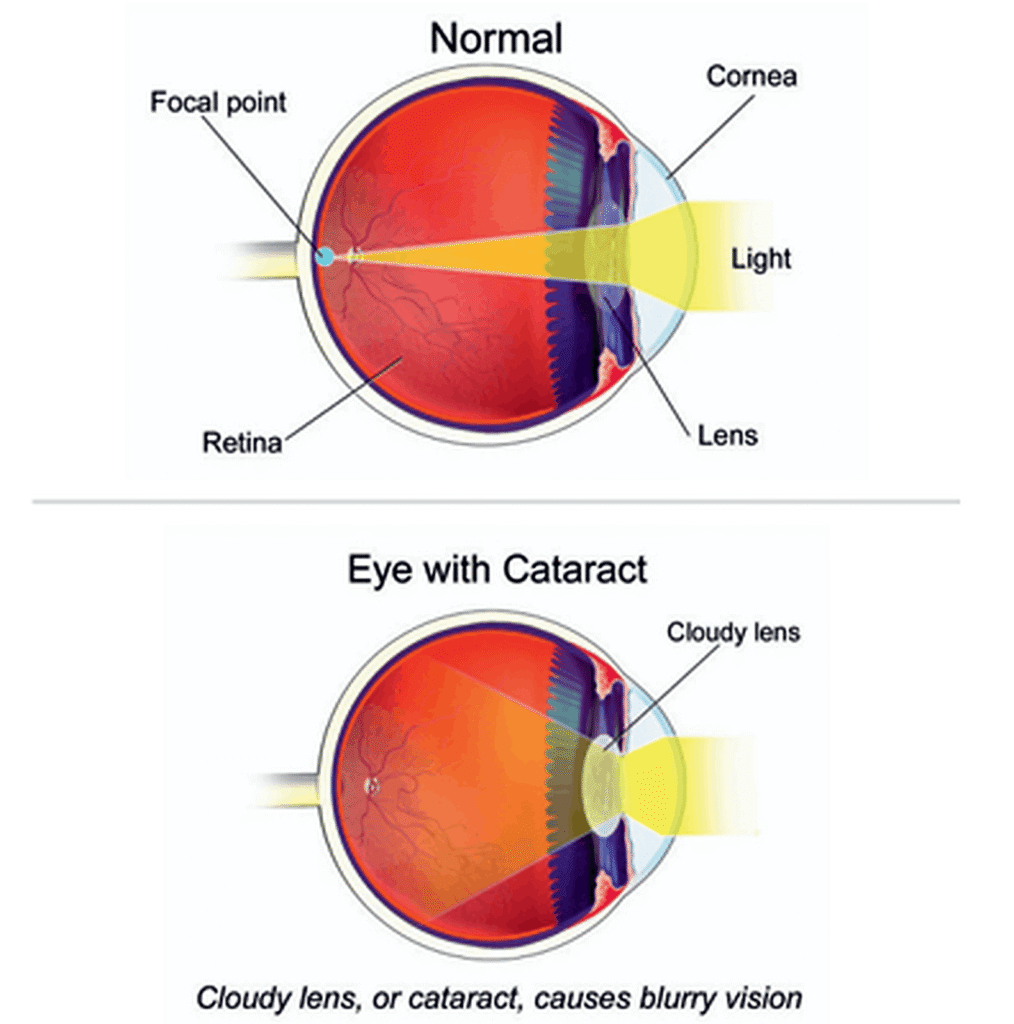
At Deshpande Eye Hospital & Laser Center, we provide advanced cataract surgery using modern microsurgical techniques and state-of-the-art technology to restore clear, comfortable vision. Cataracts occur when the eye's natural lens becomes cloudy, leading to blurred vision, glare, difficulty reading, and reduced night vision. Our experienced ophthalmologists perform thorough eye examinations to determine the most suitable treatment and ensure the best possible outcomes for every patient.

We offer personalized cataract care with comprehensive pre-operative assessment, precise surgical planning, advanced intraocular lens (IOL) options, and dedicated post-operative follow-up. Our focus is on delivering safe, painless, and effective treatment while helping patients achieve improved vision and a better quality of life.
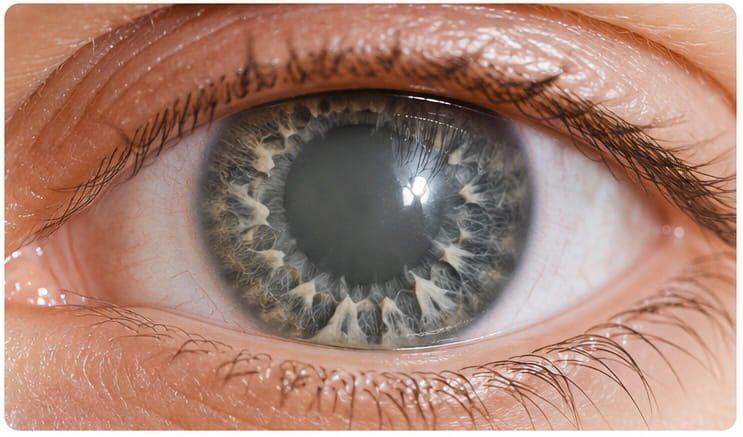
Types of Cataract

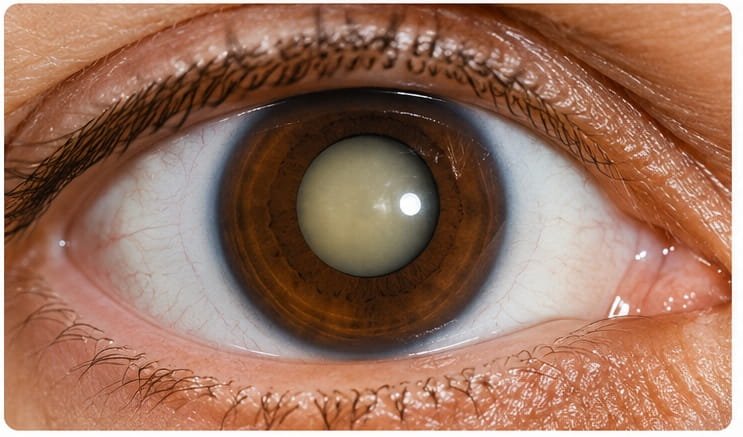
Cataracts can develop in different parts of the eye’s natural lens and may affect vision in different ways. The main types of cataract include Nuclear Cataract, Cortical Cataract, Posterior Subcapsular Cataract, and Congenital Cataract. Each type can cause different symptoms, such as blurred vision, glare, or difficulty seeing at night. Age-related cataracts are the most common, while some cataracts may occur due to injury, medical conditions, or other factors. Identifying the type of cataract helps the eye specialist determine the most suitable treatment. A comprehensive eye examination is essential for accurate diagnosis and timely cataract treatment.

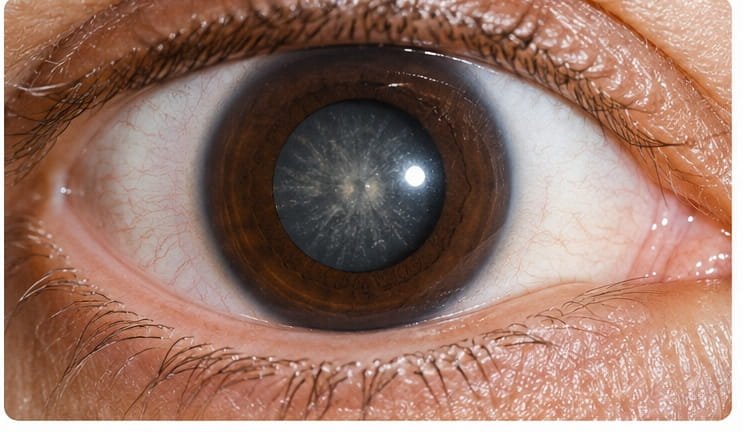
Nuclear Cataract

Occurs in the center of the lens and is commonly associated with aging.

Cortical Cataract

Develops around the outer edges of the lens and gradually progresses toward the center.

Posterior Subcapsular

Forms at the back of the lens and often affects reading vision and night vision.

Congenital Cataract

Present from birth or develops during childhood.

Symptoms of Cataract

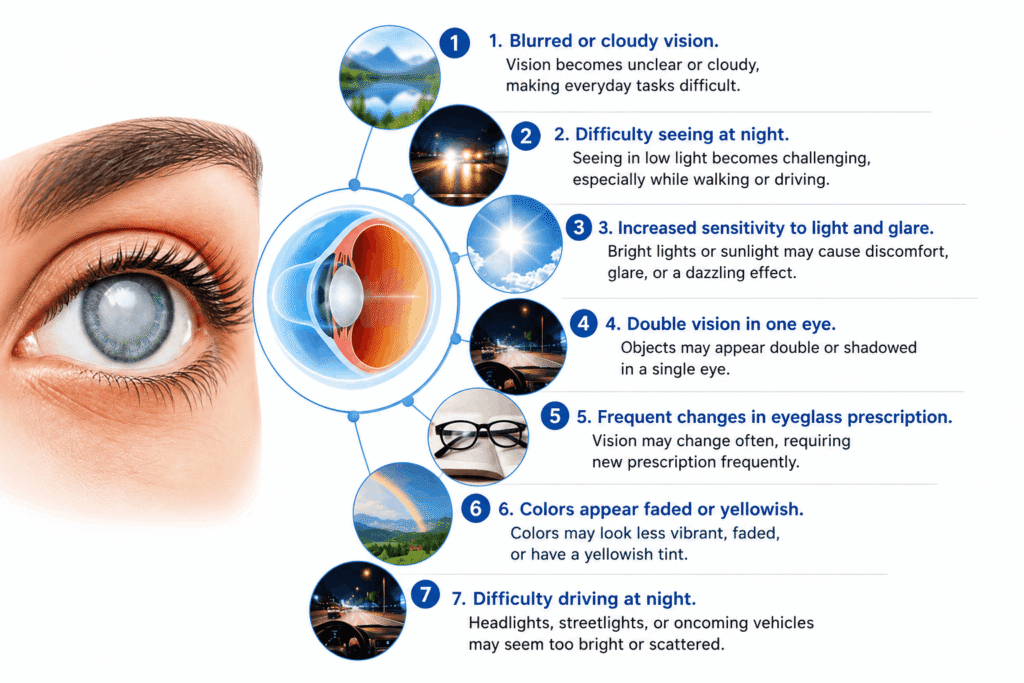
Cataract is a common eye condition that causes the natural lens of the eye to become cloudy. The symptoms of cataract usually develop gradually and may become more noticeable over time. You may experience blurred vision, glare, difficulty seeing at night, or faded colours.Some people may also notice frequent changes in their eyeglass prescription. Recognizing these early cataract symptoms can help in getting timely eye care. If you experience any changes in your vision, consult an eye specialist for a comprehensive eye examination.

Causes and Risks of Cataract

1. Aging (most common cause)

2.Diabetes

3.Eye injury or trauma

4.Long-term steroid medication

5.Smoking

6.Excessive UV exposure

7.Family history

8.Previous eye surgery

When Should You Consider Cataract Surgery?

 1.Vision interferes with daily activities

2.Difficulty driving at night

3.Reading becomes difficult

4.Glasses no longer improve vision

5.Cataract affects work or hobbies

6.Cataract begins affecting retinal examination or glaucoma management

Advanced Cataract Surgery at Deshpande Eye Hospital

 At Deshpande Eye Hospital, we use advanced technology to provide safer, more accurate, and highly successful cataract surgery.

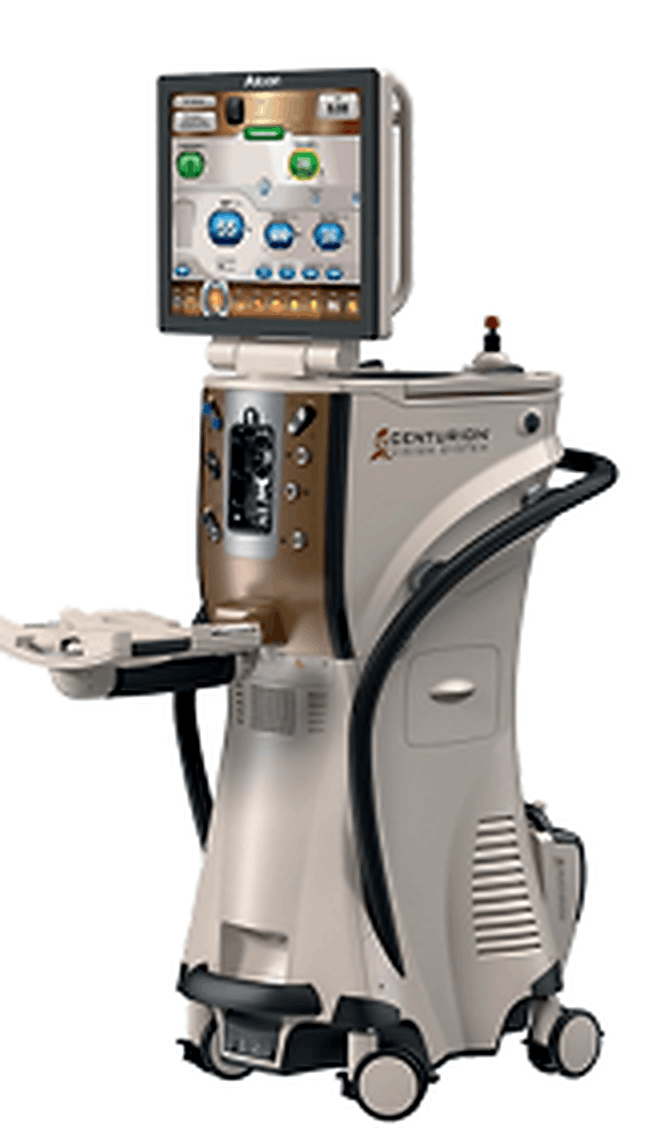
REGULAR PHACO CATARACT SURGERY

In Regular Phaco Cataract Surgery,
the cataractous lens is emulsified or
dissolved using ultrasonic energy.
The lenses used in this surgery are not
ultra soft and require an incision Of
about 3 mm to enter the eye.
Since the eye opening is very small
and designed in a special manner, it
self-seals and no sutures are
required. Hence this procedure is also
popularly known as Stitch- less
cataract surgery.

MICRO PHACO CATARACT SURGERY

Micro Phaco Cataract Surgery is
also known as MICS (Micro
Incision Cataract Surgery).
In this technique, the cataractous
lens is dissolved and aspirated
through a 2.2 mm micro incision
using micro ultrasonic tip and a
special super soft IOL (Intra
Ocular Lens) is inserted through
the same incision.
The incision in the Micro Phaco is
much smaller than the incision in a
Regular Phaco technique.
Micro Phaco is designed to speed up the recovery Of Vision,
improve visual outcomes and reduce the restriction on your
activities after the surgery.

Contacts